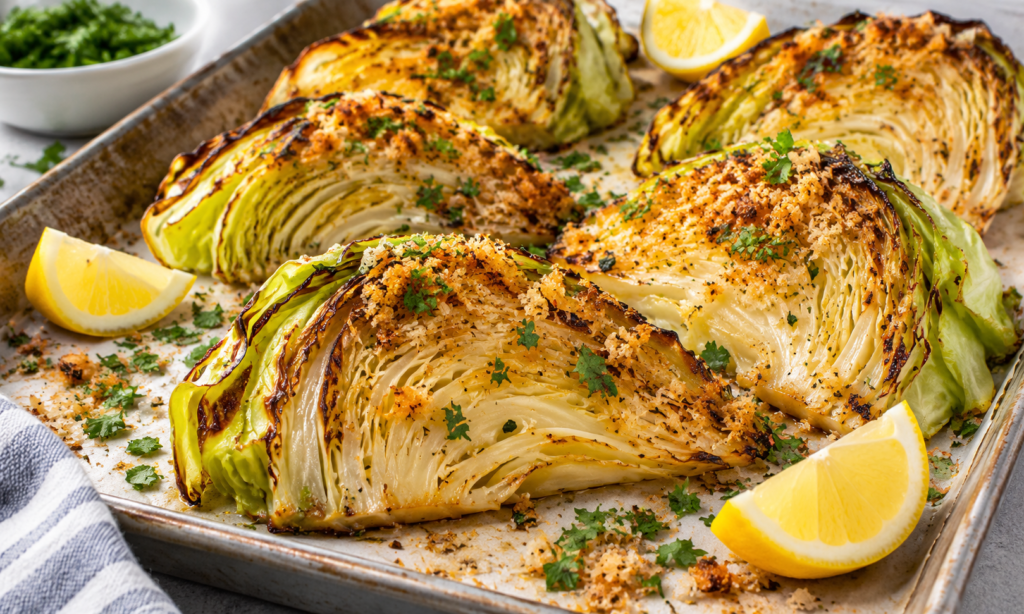
Roasted Cabbage Wedges with Lemon and Crispy Breadcrumbs
Yield: 4 side servings
Ingredients
- 1 small green cabbage, about 2 lb (900 g)
- 2 tablespoons olive oil, divided
- ¼ cup (about 15 g) panko breadcrumbs
- 1 lemon, zest and juice to taste
- 2 tablespoons chopped flat-leaf parsley
- Fine salt and black pepper
Instructions
- Heat the oven and cut the cabbage. Set the oven to 425°F (220°C conventional or 200°C fan). Discard damaged outer leaves. Halve the cabbage through the stem, then cut each half into four wedges through the core. Pat the cut faces dry.
- Oil and arrange the wedges. Rub with 1½ tablespoons olive oil, season with salt and pepper, and place one cut face down on a rimmed baking sheet. Leave space between wedges.
- Roast both sides. Roast for about 15 minutes, turn with a broad spatula and roast for 12–18 minutes more. Check the thinnest wedges first. Look for browned cut faces and thick layers that a knife can pierce easily.
- Toast the topping. While the cabbage roasts, stir ¼ cup panko and the remaining ½ tablespoon oil in a small skillet over medium heat for 2–4 minutes, until golden. Tip onto a plate and mix in lemon zest to taste and 2 tablespoons chopped parsley just before serving.
- Finish with lemon. Squeeze lemon over the hot wedges and scatter the crumbs on top. Serve extra crumbs separately so they stay crisp.
Roasted cabbage wedges are an easy oven-baked side dish with tender centers, golden edges, fresh lemon and crisp toasted breadcrumbs. Roast green cabbage wedges cut-side down at 425°F (220°C conventional or 200°C fan), turning once, until a knife slides through the thickest part. Keep a sliver of core on each wedge so it holds together. Finish with lemon and toasted crumbs just before serving.
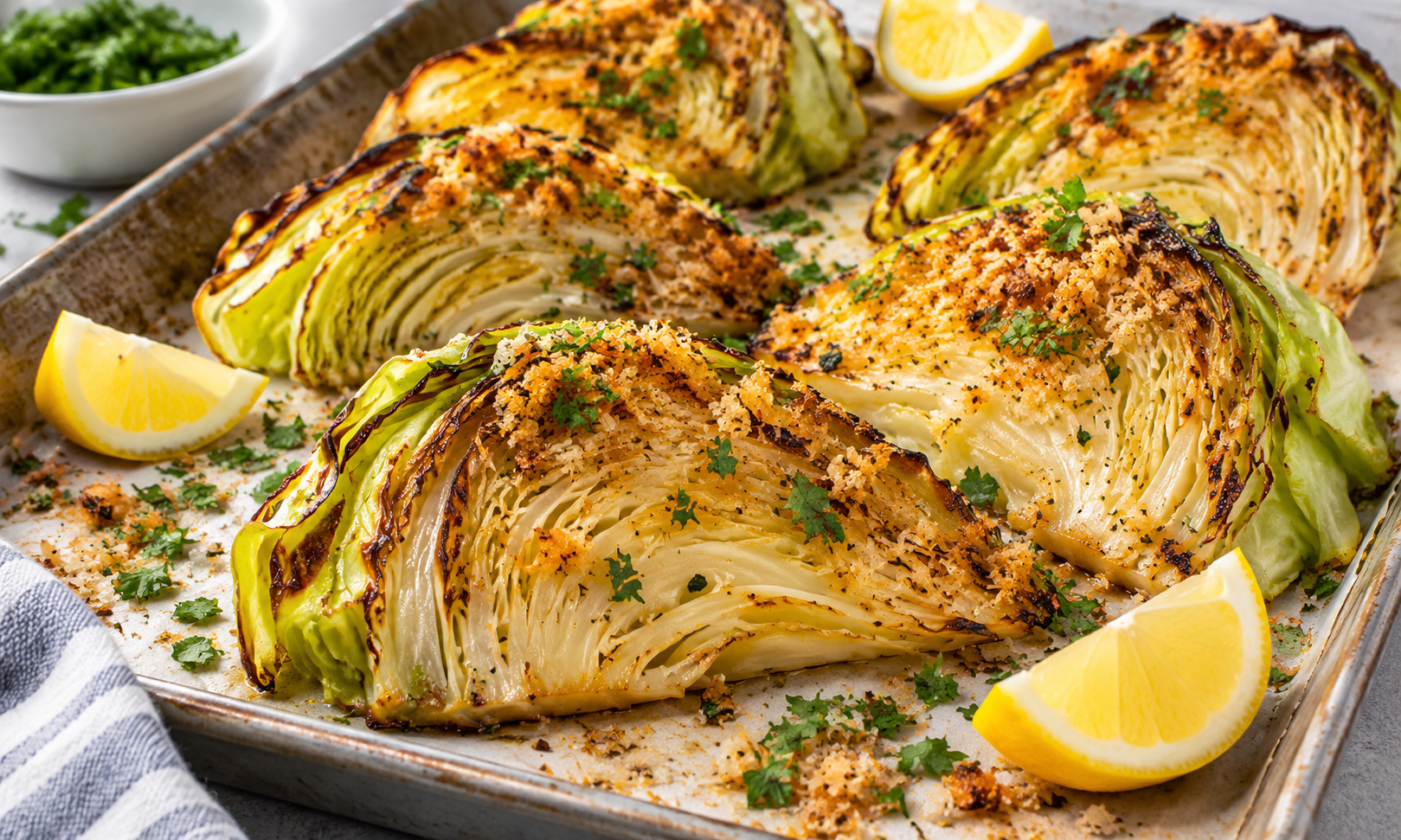
At a glance: roasted cabbage wedges. Serves 4 as a side; allow around 10–15 minutes for preparation and about 27–33 minutes of roasting. The exact time depends on the thickness of the wedges and your oven. Use a knife to test tenderness, and add the toasted breadcrumbs right before serving so they stay crisp.
Ingredients for 4 side servings
- 1 small green cabbage, about 2 lb (900 g)
- 2 tablespoons olive oil, divided
- ¼ cup (about 15 g) panko breadcrumbs
- 1 lemon, zest and juice to taste
- 2 tablespoons chopped flat-leaf parsley
- Fine salt and black pepper
How to make roasted cabbage wedges in 5 steps
- Heat the oven and cut the cabbage. Set the oven to 425°F (220°C conventional or 200°C fan). Discard damaged outer leaves. Halve the cabbage through the stem, then cut each half into four wedges through the core. Pat the cut faces dry.
- Oil and arrange the wedges. Rub with 1½ tablespoons olive oil, season with salt and pepper, and place one cut face down on a rimmed baking sheet. Leave space between wedges.
- Roast both sides. Roast for about 15 minutes, turn with a broad spatula and roast for 12–18 minutes more. Check the thinnest wedges first. Look for browned cut faces and thick layers that a knife can pierce easily.
- Toast the topping. While the cabbage roasts, stir ¼ cup panko and the remaining ½ tablespoon oil in a small skillet over medium heat for 2–4 minutes, until golden. Tip onto a plate and mix in lemon zest to taste and 2 tablespoons chopped parsley just before serving.
- Finish with lemon. Squeeze lemon over the hot wedges and scatter the crumbs on top. Serve extra crumbs separately so they stay crisp.
Why are my wedges falling apart?
Check how you sliced them. Each wedge needs a little of the core running along its base. Slide the spatula all the way underneath to turn it. Any loose leaves can roast alongside the wedges, but lift them off early if their edges darken before the thicker pieces are tender.
What goes with roasted cabbage?
Try it alongside sheet-pan lemon chicken, or serve it with a bowl of soup and toasted bread. Panko contains wheat in most brands, so check the label if choosing a substitute.
Tips for the best roasted cabbage wedges
For evenly cooked roasted cabbage wedges, choose a cabbage that feels firm and heavy for its size. Remove any badly damaged outer leaves, then cut through the stem so every piece holds a small section of the core. Try to make the wedges similar in thickness; very thin pieces can brown before thicker ones turn tender.
A roomy baking sheet matters. Crowded cabbage releases moisture and steams instead of developing well-browned cut faces. Use a second tray if needed, and dry wet surfaces before adding oil. The oven should be fully preheated before the tray goes in. A little caramelization is desirable, but blackened, dry leaf tips should be removed if they cook much faster than the center.
How to get crispy edges without drying out the center
The trick to well-browned roasted cabbage wedges is a balance of high heat and enough thickness for the centers to soften. Keep the wedge layers attached to the core, lightly coat both cut faces with oil, and leave room between pieces. If the tips begin browning too fast while the core is still firm, move the tray down one rack or loosely cover the darkest tips with a small piece of foil for the final minutes. Check doneness with a knife rather than relying only on color.
How to adapt the lemon and breadcrumb topping
For brighter roasted cabbage wedges, add a little extra lemon zest to the toasted crumbs, then squeeze the juice over the cabbage just before eating. If you need a wheat-free topping, choose certified gluten-free breadcrumbs and check every ingredient label. For a breadcrumb-free finish, try chopped toasted pumpkin seeds instead; keep them separate until serving so they stay crunchy. These swaps change the texture and flavor, but not the basic roasting technique.
When serving roasted cabbage wedges at a larger meal, arrange them in a single layer on a platter rather than stacking them. That helps protect the browned surfaces from trapped steam. Offer the lemon wedges and crumbs on the side so guests can adjust the finish to their taste.
Can you prepare cabbage wedges ahead?
You can cut the cabbage into wedges earlier in the day and keep it covered in the refrigerator until you are ready to roast. Toast the breadcrumbs separately and store them in a dry, covered container once cool. For the best texture, roast the cabbage close to serving time and add the lemon and crumbs at the end, rather than letting them sit on the hot vegetables.
How do you know when cabbage is done?
Look for golden-brown patches on both cut sides and test the thickest part with a small knife. It should slide in with little resistance while the wedge still holds its shape. Cooking time varies with cabbage size, tray material and oven performance, so use the appearance and tenderness as the final checks instead of relying only on the clock.
Frequently asked questions about roasted cabbage wedges
Do you need to boil cabbage before roasting?
No. This method cooks raw green cabbage directly in the oven. Cutting it into even wedges, adding a little oil and leaving space on the tray helps the cut faces brown while the centers become tender.
Can you make roasted cabbage wedges without breadcrumbs?
Yes. Leave out the panko for a simpler side dish and finish with lemon zest and parsley. If you need to avoid wheat, check any breadcrumb replacement for its ingredients and allergen information.
How should leftovers be stored?
Refrigerate leftovers promptly in a covered, shallow container; do not leave cooked food at room temperature for more than two hours. For best texture, warm the cabbage in the oven until heated through and add fresh breadcrumbs afterward. The vegetables may be softer when reheated. Follow FoodSafety.gov’s leftover storage guidance rather than relying on texture to judge safety.
Other easy vegetable side dishes
If you enjoy simple roasted vegetables, also see our vegetable guide and white bean spinach skillet for another vegetable-rich dinner idea.
Join the conversation