These homemade burger recipes give you three reliable starting points: a juicy beef patty, a tender ground-chicken option and a satisfying black bean–quinoa veggie burger. Each recipe makes four patties and includes measured ingredients, straightforward instructions, topping ideas and practical cooking tips. You can prepare a classic dinner using a skillet or grill, while the softer veggie patties are best cooked in a pan.
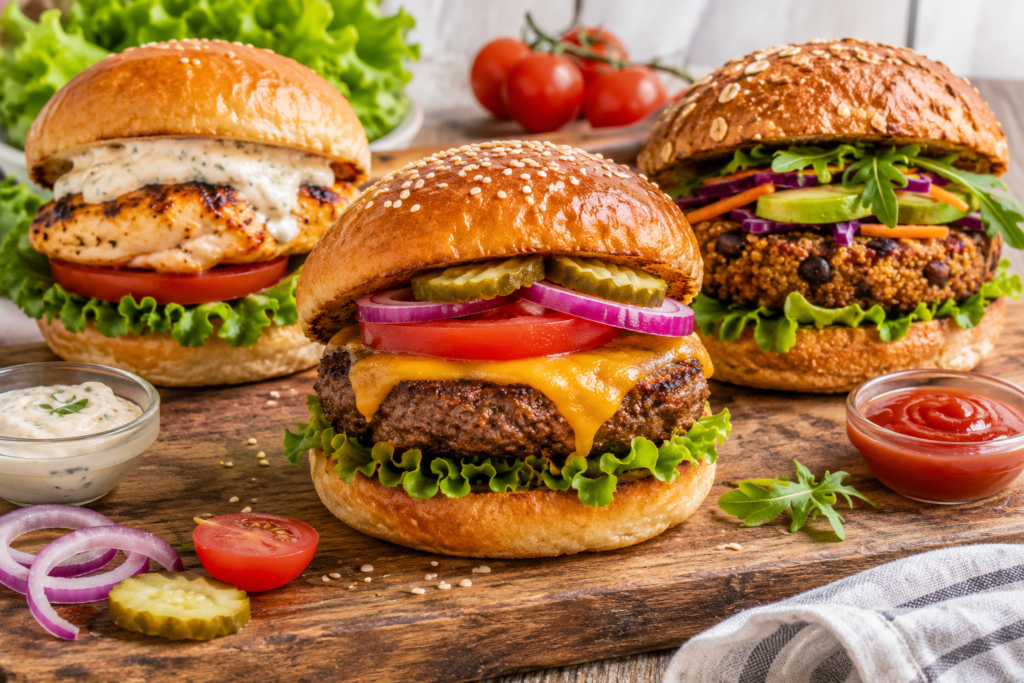
At a glance: Plan on roughly 20–30 minutes of preparation, plus chilling and cooking where noted. Cook ground beef to 160°F (71°C) and ground chicken to 165°F (74°C), checking with a clean food thermometer. Browning alone does not establish doneness.
1. Juicy Beef Burger Recipe
Yield: 4 burgers. Preparation: about 15 minutes, plus optional 15–20 minutes chilling. Cooking: approximately 8–12 minutes, depending on thickness and heat.
Beef Patty Ingredients
- 500 g ground beef, approximately 80% lean and 20% fat
- 1 teaspoon salt
- ½ teaspoon ground black pepper
- ½ teaspoon garlic powder
- 1 tablespoon Worcestershire sauce, optional (check allergens)
- 4 buns, such as brioche
- Optional lettuce, tomato, red onion, pickles and cheese
How to Cook Beef Patties
- Combine beef with pepper, garlic powder and optional Worcestershire sauce, handling gently. Season the outside with salt shortly before cooking.
- Divide into four equal portions and shape into approximately ¾-inch-thick patties. Make a shallow indentation in each center.
- Refrigerate the patties while heating a grill or heavy skillet to medium-high.
- Cook, turning as needed for even browning. Start checking after several minutes per side, but use a thermometer to confirm 160°F (71°C) throughout. Add cheese near the end if desired.
- Toast the buns cut-side down, then assemble with sauce, lettuce, cooked beef and your chosen toppings. Serve promptly.
2. Tender Chicken Burger Recipe
Yield: 4 burgers. Ground chicken patties are naturally softer than beef. Finely grated onion adds moisture, while breadcrumbs help the mixture hold together during cooking.
Chicken Patty Ingredients
- 500 g ground chicken, preferably thigh meat
- ¼ cup finely grated onion
- 1 tablespoon olive oil
- 1 teaspoon smoked paprika
- ½ teaspoon ground cumin
- Salt and black pepper to taste
- 1 tablespoon breadcrumbs
- 4 soft buns
- Avocado, arugula, tomato and garlic mayonnaise, optional
How to Make Chicken Burgers
- Mix chicken, onion, olive oil, paprika, cumin, seasoning and breadcrumbs just until combined.
- Shape into four evenly thick patties with lightly oiled hands. Cover and refrigerate for about 20 minutes.
- Heat a lightly oiled nonstick skillet over medium heat. Cook the patties, turning gently, for an estimated 5–6 minutes per side. Check the center of each patty and continue cooking until it reaches 165°F (74°C).
- Toast buns and layer with garlic mayonnaise, arugula, avocado, tomato and the fully cooked patty. Use a clean plate for cooked patties.
3. Black Bean and Quinoa Veggie Burgers
Yield: 4 burgers. This meat-free option uses mashed beans, cooked quinoa and breadcrumbs to create a sturdy but tender patty. Cooking the mixture in a skillet rather than over open grill grates makes turning easier.
Veggie Patty Ingredients
- One 400 g can black beans, drained thoroughly and mashed
- ½ cup cooked quinoa
- ¼ cup breadcrumbs, plus a little more if needed
- 1 small onion, finely diced
- 1 garlic clove, minced
- 1 tablespoon soy sauce
- 1 teaspoon smoked paprika and ½ teaspoon ground cumin
- 1 tablespoon olive oil for the pan
- 4 whole-wheat buns, plus hummus, roasted peppers and spinach for serving
How to Cook the Bean Patties
- Mash the drained beans, leaving a little texture. Stir in quinoa, breadcrumbs, onion, garlic, soy sauce and spices.
- Shape into four patties. If the mixture is wet, add breadcrumbs a teaspoon at a time; avoid making it dry and crumbly.
- Chill about 30 minutes to help the patties hold together. Heat olive oil in a skillet over medium heat.
- Cook approximately 4–5 minutes per side until browned, firm and hot throughout. Turn carefully with a broad spatula.
- Serve on toasted whole-wheat buns with hummus, roasted red peppers, spinach and red onion.
What Makes a Great Burger?
The biggest difference between an average burger and a great one is control over the patty. Gentle mixing keeps the meat from becoming overly firm. Uniform patty thickness helps with even cooking. An indentation in the center of a beef patty can reduce puffing, while chilling soft chicken and bean patties makes them easier to handle. Toasting buns provides some protection against juicy toppings and sauces.
Beef vs. Chicken vs. Veggie: Which Patty Is Best?
Choose beef for a rich, classic burger flavor and a browned crust. Ground chicken is a versatile alternative that benefits from moisture-rich ingredients and gentle cooking. Bean and quinoa patties offer a meat-free option with a softer, hearty texture. Whichever you choose, the bun, cheese and sauce can change the meal’s nutrition considerably, so avoid assuming any one type is automatically lower in calories.
Tips for Juicy Patties
- Handle patties gently: Avoid repeatedly kneading ground meat or compacting it too firmly.
- Chill delicate mixtures: Refrigerate formed chicken and veggie patties briefly for easier turning.
- Do not press with a spatula: Squeezing beef patties during cooking releases juices.
- Check temperature: Ground beef requires 160°F and ground poultry 165°F; the appearance of pink or brown meat is not enough.
- Toast buns: A quick toast helps prevent them from becoming soggy.
- Keep raw and cooked food separate: Use clean utensils and plates, especially when handling chicken.
Common Cooking Problems and Solutions
Dry patties? Avoid overmixing and unnecessary cooking beyond a safe internal temperature. Patties falling apart? Chill soft mixtures, drain beans well and use a small amount of breadcrumbs if needed. Uneven browning? Use equally sized patties and avoid overcrowding the skillet. Soggy buns? Toast both cut surfaces and place a layer of lettuce between juicy fillings and bread.
Make-Ahead, Storage and Allergens
Keep raw patties covered in the refrigerator until cooking. If making them ahead, follow safe refrigeration limits for fresh ground meat and poultry rather than leaving them out during meal preparation. Refrigerate cooked leftovers promptly and reheat safely. Check buns and breadcrumbs for wheat, cheese and mayo for milk or eggs, Worcestershire sauce for fish, and soy sauce or hummus for soy and sesame. Refer to FoodSafety.gov’s minimum cooking temperatures and FDA food-handling guidance.
Homemade Burger Recipes: Frequently Asked Questions
How do you make homemade burgers juicy?
Use suitable ground beef fat content, handle meat gently, keep patties even and check doneness with a thermometer rather than guessing by color.
Can I cook these patties in the oven?
Yes. Use an oven-safe tray and monitor the internal temperature, allowing time to vary with patty thickness and oven performance. Chicken must reach 165°F; beef must reach 160°F.
How do you stop veggie patties from breaking?
Drain beans, mash part of the mixture, include breadcrumbs and chill the shaped patties before turning them gently in a skillet.
What is the best type of beef for homemade burgers?
An 80/20 beef blend is a common starting point for flavor and tenderness, although leaner blends can also work when not overhandled.
Can I freeze homemade patties?
Yes. Separate them with parchment, seal well, label and freeze promptly. Thaw raw meat patties safely in the refrigerator and cook to the appropriate internal temperature.
More Easy Dinner Ideas
For a different grilled meal, try our easy kebab recipes. If you like wraps, see our homemade chicken shawarma recipe, or serve the meal with a fresh chickpea cucumber salad.
Editorial note: HealthnFood Guide has not independently kitchen-tested these methods; cooking times and yields are estimates. Verify temperatures and allergen labels before serving.
Join the conversation