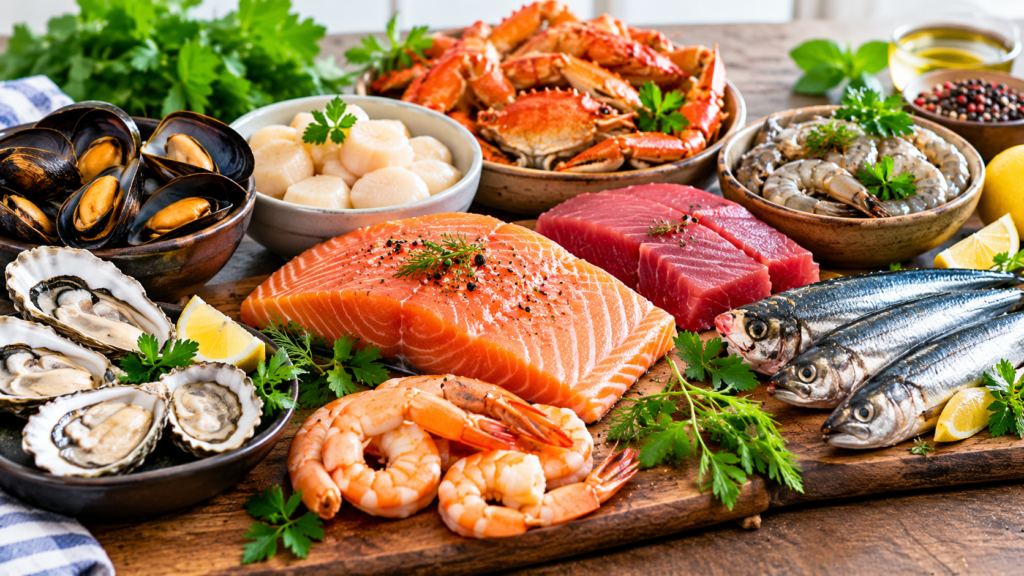
Seafood nutrition and benefits depend on the fish or shellfish you choose, how it is prepared and what else is on your plate. Salmon, sardines, trout, cod, shrimp and other seafood can provide protein and useful micronutrients, while oily fish can contribute omega-3 fatty acids. No single seafood item prevents disease, and not every species has the same mercury content.
This seafood nutrition guide explains common nutrients, potential health benefits, the best types for different meals, lower-mercury choices, safe cooking temperatures and practical advice for US and UK readers.
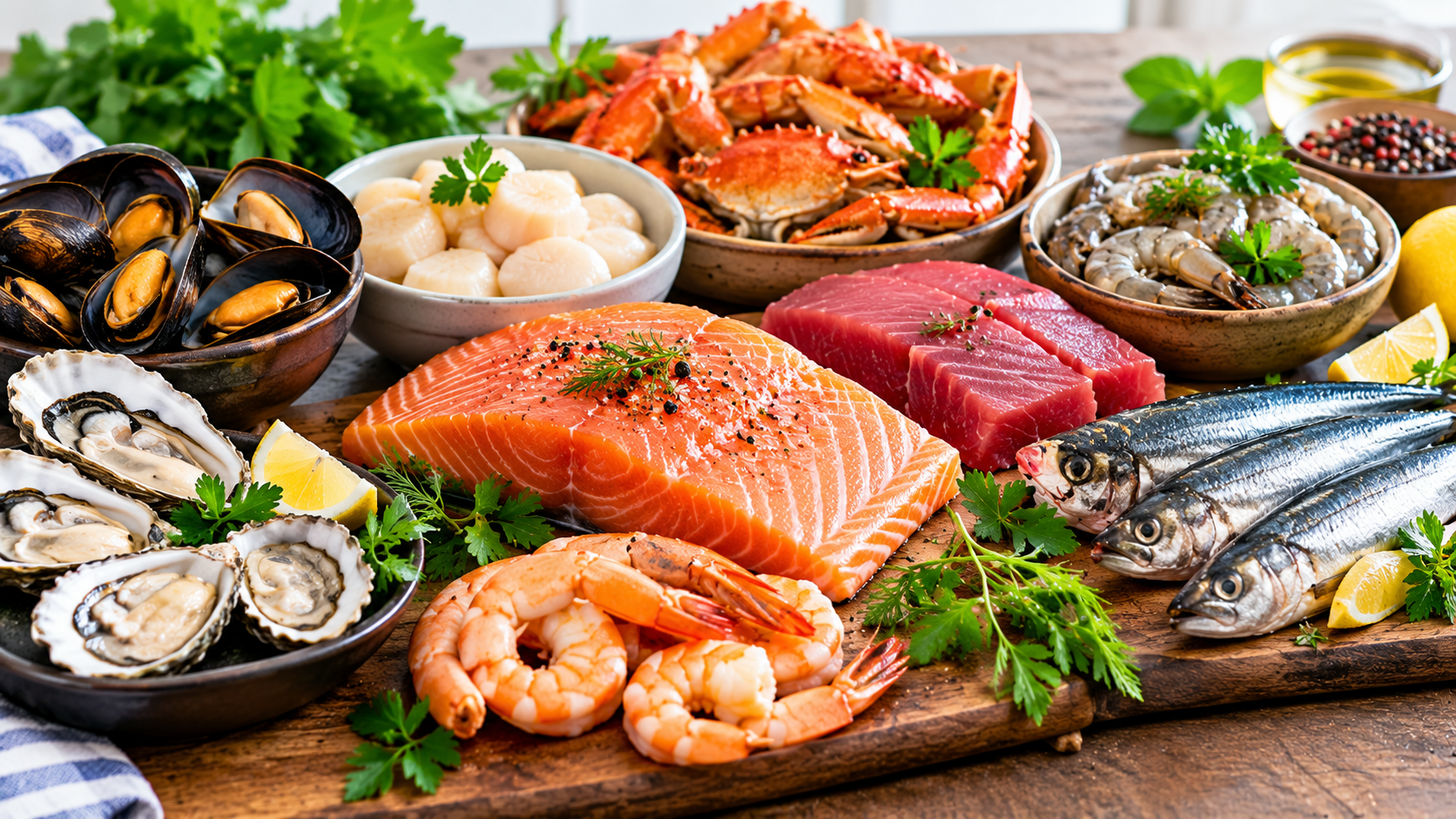
Seafood Nutrition Basics: What Counts as Seafood?
Seafood generally includes edible fish and shellfish from saltwater or freshwater. Fish include salmon, cod, sardines, trout, tuna and different mackerel species. Shellfish include shrimp or prawns, mussels, oysters, scallops, crab and lobster. Both groups can be part of a varied diet, but shellfish allergies can be serious.
Seafood Nutrition: Protein, Omega-3 Fats and Minerals
One of the main advantages of seafood nutrition is its combination of protein with vitamins and minerals. The exact amounts vary by species. Salmon and sardines are often rich in long-chain omega-3 fats, while many white fish are comparatively lean. Oysters can be especially rich in zinc, and fish may provide vitamin B12, selenium and iodine.
| Nutrient | Seafood examples | Role in normal health |
|---|---|---|
| Protein | Fish and shellfish | Maintains and repairs body tissues |
| EPA and DHA omega-3 | Salmon, sardines, trout, herring | Contribute to normal body functions and healthy eating patterns |
| Vitamin B12 | Fish and many shellfish | Supports nerve function and red blood cells |
| Vitamin D | Some oily fish | Helps maintain normal bones |
| Iodine and selenium | Several fish and shellfish | Support normal thyroid-related processes |
| Zinc | Oysters and other shellfish | Supports normal immune function |
These are qualitative examples, not fixed nutrition figures. Cooking, portion sizes and canned or packaged ingredients change the final meal’s nutrients and sodium content.
Seafood Nutrition: 6 Potential Health Benefits
1. Supports a Heart-Healthy Eating Pattern
Many oily fish contain EPA and DHA omega-3 fats. The NHS fish and shellfish guide explains why oily fish can be part of a heart-healthy diet. These potential benefits arise in the context of an overall eating pattern, not from treating fish as a medicine.
2. Provides Complete Protein
Fish and shellfish contain all essential amino acids. Protein contributes to tissue repair and maintenance, making seafood useful in salads, rice bowls and family dinners. Breaded or deep-fried seafood may carry additional oil, salt or calories depending on preparation.
3. Contributes to Normal Brain Function
DHA is a structural component of nervous-system tissues. Oily fish is a dietary source, but eating additional fish does not guarantee better memory or concentration. Pregnancy and childhood require careful fish selection because both nutrients and contaminants matter.
4. Supplies Nutrients Involved in Bone Health
Some oily fish provide vitamin D. Canned sardines with soft edible bones can also supply calcium. Seafood can complement other foods that provide calcium and vitamin D without replacing a varied diet.
5. Adds Vitamins and Minerals
Depending on species, seafood can provide vitamin B12, zinc, iodine, selenium and iron. Each plays different roles in normal physiology. The amount should not be assumed from the name “seafood” alone.
6. Offers Variety in Balanced Meals
Switching among lower-mercury fish, shellfish and other protein foods can make meals more varied. Frozen or canned products can offer convenient options; compare added salt and sauces, and follow storage instructions.
Seafood Nutrition: 8 Practical Fish and Shellfish Choices
| Seafood | Notable features | How to serve it |
|---|---|---|
| Salmon | Protein, omega-3, sometimes vitamin D | Bake with vegetables |
| Sardines | Omega-3; calcium if edible bones included | Serve on whole-grain toast |
| Trout | Protein and omega-3 | Roast with lemon |
| Cod | Relatively lean fish protein | Poach or bake with herbs |
| Herring | Oily fish with omega-3 | Choose appropriately prepared servings |
| Shrimp or prawns | Protein; check shellfish allergy | Add fully cooked to stir-fries |
| Canned light tuna | Convenient protein; generally lower mercury than albacore | Use in sandwiches or bean salad |
| Oysters | Source of zinc; high food-safety sensitivity if raw | Eat fully cooked |
For seafood nutrition and benefits, no single species is “best” for everyone. Budget, allergies, preparation, local availability and mercury recommendations affect the choice.
Seafood Nutrition and Mercury: Why Species Matter
Mercury levels vary substantially. For example, canned light tuna is generally a lower-mercury choice than albacore tuna, while bigeye tuna is a high-mercury fish to avoid for groups covered by the FDA/EPA guidance. Atlantic mackerel and king mackerel are not interchangeable; king mackerel is among the high-mercury species to avoid for these groups.
People who are pregnant, may become pregnant or are breastfeeding, and caregivers feeding young children, should follow the current FDA/EPA Advice About Eating Fish chart for exact choices and portions. UK readers should consult the NHS fish guidance. Recommendations differ by life stage and location.
Seafood Nutrition: How Much Fish Should You Eat?
As general guidance, the US Dietary Guidelines approach cited by the FDA suggests at least 8 ounces of seafood weekly for many adults on a 2,000-calorie eating pattern. For pregnancy and breastfeeding, FDA/EPA advice generally covers 8–12 ounces per week from lower-mercury options. In the UK, the NHS recommends at least two 140 g portions of fish weekly, including one oily fish portion, while setting additional restrictions for certain groups.
Portions depend on age, pregnancy status, health concerns and food preferences. Consult the appropriate public-health guidance rather than interpreting the figures as identical rules for everyone.
Seafood Nutrition: Healthy Cooking Methods
Baking, grilling, steaming and poaching can be practical alternatives to deep-frying. Add herbs, lemon, vegetables and whole grains for balanced meals. Canned fish works in lunch salads, while portioned frozen fillets can reduce food waste when cooking for a small household.
- Sheet-pan dinner: Roast firm vegetables first; add salmon or cod later according to thickness.
- Quick lunch: Mix canned salmon or canned light tuna with white beans, lemon and chopped vegetables.
- Fast stir-fry: Add fully cooked shrimp to vegetables and rice.
- Budget meal: Serve canned sardines over whole-grain toast with tomatoes.
Seafood Nutrition and Food Safety: Cooking and Storage
According to the FDA safe food handling guide, fin fish should reach 145°F (63°C), or be opaque and separate easily with a fork. Shrimp, crab and lobster should become pearly and opaque; scallops should become opaque and firm. Cook clams, mussels and oysters until shells open, and discard those that remain closed after cooking.
Thaw frozen seafood in the refrigerator or use another FDA-recommended method, never leave it thawing on the counter. Refrigerate perishable seafood promptly and separate raw fish from ready-to-eat foods. Raw oysters and undercooked seafood present increased food-poisoning risks; people at higher risk should avoid them. Fish and shellfish allergens require careful label checking and avoidance when diagnosed.
Seafood Nutrition: Frequently Asked Questions
Is seafood healthy to eat regularly?
It can be. Fish and shellfish can contribute protein, vitamins and minerals to a balanced diet. Choose species appropriate to your needs and follow mercury and food-safety advice.
Which fish are highest in omega-3?
Salmon, sardines, trout, herring and some mackerel species are useful oily-fish sources. Always distinguish lower-mercury species from high-mercury ones when selecting fish.
Is frozen seafood as nutritious as fresh?
Properly stored frozen fish and shellfish can be nutritious and convenient. Quality and nutrient profiles depend on the product and how it is stored and cooked.
What seafood is suitable during pregnancy?
Choose fully cooked, lower-mercury seafood according to the current health guidance in your country. Avoid high-mercury species, and follow pregnancy-specific advice for raw or cold-smoked fish.
How do I cook fish safely?
For fin fish, use a clean thermometer to check for 145°F (63°C) at the thickest point. Observe the FDA’s separate appearance guidance for shrimp and different shellfish.
Can children eat fish?
Yes, when appropriately prepared and served in age-appropriate portions, while avoiding high-mercury species. Check for fish and shellfish allergies and remove bones carefully.
Seafood Nutrition: Key Takeaways
- Seafood offers protein, while oily fish often supplies omega-3 fatty acids.
- Different species have different nutrition and mercury profiles.
- US and UK weekly portion advice is not identical, especially for pregnancy and children.
- Cook seafood thoroughly and handle raw products carefully.
- Balanced meals matter more than claims about any one “superfood.”
Sources and Editorial Note
For nutrition and fish portions, see NHS: Fish and Shellfish. For mercury categories, see FDA/EPA: Advice About Eating Fish. For cooking temperatures and handling, see FDA: Safe Food Handling.
For recipes, explore our tuna and white bean salad or easy weeknight dinner recipes. This article provides general education, not individualized medical or dietary advice. It has not been independently medically reviewed.

Join the conversation