These 12 everyday nutrient-rich foods can help provide vitamins, minerals, protein and other nutrients needed for everyday health. A varied diet supports normal immune processes, but no food can guarantee that you will avoid infection. Nutrition is one part of health alongside sleep, physical activity, vaccinations and appropriate medical care.
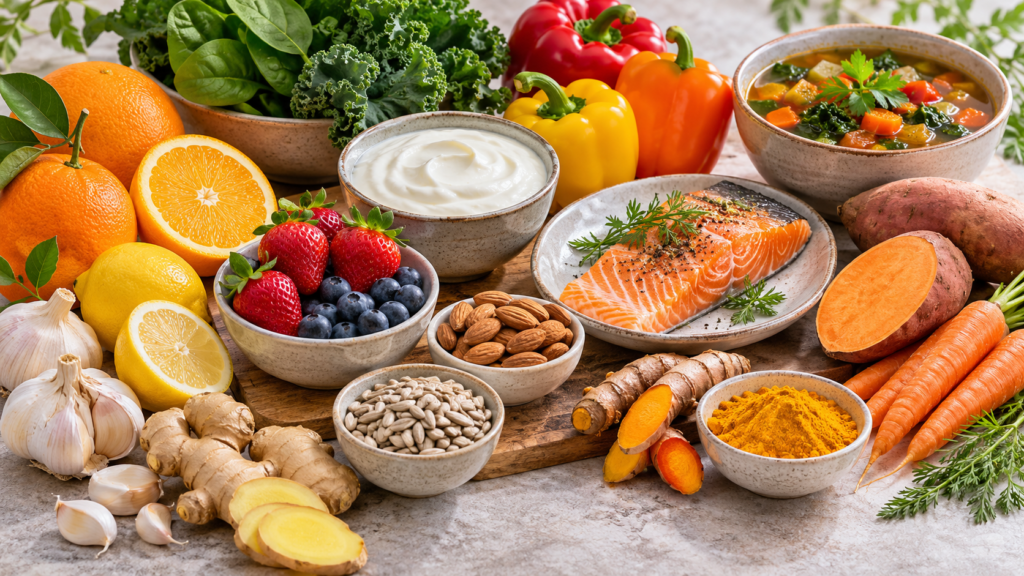
Quick answer: Include citrus fruits, garlic, ginger, leafy greens, plain yogurt, nuts and seeds, bell peppers, fish, berries, vegetable soup, turmeric-seasoned dishes, and sweet potatoes or carrots. These foods contribute different nutrients; not all have proven direct effects on infections.
Why Nutrition Matters: Foods That Support Normal Immune Function
The immune system relies on adequate nutrition. Vitamin A contributes to normal immune function and maintenance of body surfaces; vitamin C and zinc also have established roles in normal immune processes. Vitamin D, iron, folate and other micronutrients matter too. The NIH Office of Dietary Supplements explains that getting enough nutrients is important, but taking extra supplements usually does not prevent infections or speed recovery in people without a deficiency.
Rather than searching for one “immune-boosting” ingredient, build meals that include several food groups. The following list focuses on accessible foods and sensible cooking ideas for US and UK readers.
Evidence Check: Nutrients Versus Infection Prevention
There is an important difference between supplying nutrients needed for a normally functioning immune system and proving that a particular food prevents or treats an infection. The NIH Office of Dietary Supplements explains that inadequate nutrient intake can impair immune function, while taking more vitamins and minerals than needed generally does not help people without a deficiency avoid infections or recover faster. Food-specific clinical benefits should not be assumed from nutrient content alone.
| Food or nutrient example | What is reasonably supported | What is not established |
|---|---|---|
| Citrus, bell peppers and vitamin C | Vitamin C contributes to normal immune function; these foods can provide it | Eating extra oranges guarantees that you will not catch a cold |
| Carrots, sweet potatoes and provitamin A | The body can convert beta-carotene into vitamin A, an essential nutrient | Carrots can treat an existing infection |
| Yogurt and fermented foods | Many products provide protein, and some contain live microorganisms | Every yogurt product has the same proven infection-prevention benefit |
| Garlic, ginger and turmeric | Useful flavoring ingredients within a varied eating pattern | Ordinary culinary amounts replace vaccination, antibiotics or medical care |
For readers: Use the food list below to build varied meals, not as a treatment checklist. See the NHS balanced-diet guidance for general dietary patterns, and seek medical advice about specific symptoms or deficiencies.
12 Foods That Support Normal Immune Function
1. Citrus Fruits — Vitamin C
Citrus fruits can contribute vitamin C: oranges, mandarins, clementines and grapefruit supply vitamin C. This vitamin is involved in normal immune function and helps the body absorb iron from plant foods. Eat whole fruit as a snack or use orange segments in a salad with beans and leafy greens.
Practical tip: Whole citrus fruit provides fiber as well as juice. Some grapefruit products interact with medicines, so check with a pharmacist if you take prescription medications.
2. Garlic — Flavor for Balanced Meals
Garlic is a versatile ingredient for lentil soup, roasted vegetables, fish and bean dishes. It contains naturally occurring sulfur compounds, although eating garlic has not been shown to replace vaccination or treatment for infections.
Meal idea: Add minced garlic to a pan of olive oil, then toss with cooked spinach and chickpeas. Use garlic for flavor, not as an antibiotic substitute.
3. Ginger — An Easy Cooking Ingredient
Fresh or ground ginger adds a warm, aromatic flavor to curries, vegetable stir-fries and soups. It contains plant compounds studied for various effects, but culinary ginger should not be described as a proven way to prevent colds or flu.
Meal idea: Add grated ginger to a vegetable noodle stir-fry with broccoli, bell peppers and a protein of your choice.
4. Leafy Greens — Folate and Vitamin A Precursors
Spinach, kale and other dark leafy greens provide folate and carotenoids, while their exact vitamin content varies by variety and preparation. These nutrients contribute to normal functions throughout the body. Fresh and frozen greens are both useful options.
Meal idea: Stir spinach into lentil soup near the end of cooking or add chopped greens to eggs and whole-grain toast.
5. Plain Yogurt — Protein and Fermented Dairy
Plain yogurt can contribute protein and, depending on the product, calcium and other nutrients. Some yogurt contains live cultures, but effects differ by strain and product; not all fermented foods have proven immune benefits.
Meal idea: Serve unsweetened yogurt with berries and oats. Check the label for milk allergens and added sugar, and select a fortified alternative if you avoid dairy.
6. Nuts and Seeds — Vitamin E and Minerals
Nuts and seeds offer useful nutrients: almonds, sunflower seeds, pumpkin seeds and similar choices contribute vitamin E, healthy fats and minerals such as zinc. Nutrient amounts differ substantially, so mix varieties rather than relying on one seed.
Meal idea: Sprinkle a small portion of unsalted seeds over oatmeal or a salad. Nuts and seeds can be serious allergens, and whole nuts are choking hazards for young children.
7. Bell Peppers — Another Vitamin C Source
Bell peppers add color and vitamin C to meals. Pairing vitamin C-rich peppers with beans may also support absorption of non-heme iron from plant foods.
Meal idea: Slice raw peppers for hummus or roast them with onions and chickpeas for an easy dinner bowl.
8. Fish — Protein, Vitamin D and Other Nutrients
Fish can complement other everyday foods: salmon, sardines and other species provide protein; some oily fish also contain vitamin D and omega-3 fats. The amount varies by species. Fish is a food source of nutrients, not a substitute for treating an infection.
Meal idea: Bake salmon with tomatoes and zucchini, or mix canned salmon into a salad. Follow local advice on fish choices and mercury for pregnancy, breastfeeding and young children, and cook fish safely.
9. Berries — Fruit Variety and Fiber
Berries add variety to meals: blueberries, strawberries and raspberries supply fiber and various plant compounds. Strawberries also supply vitamin C. Research on isolated compounds should not be taken as evidence that a bowl of berries prevents respiratory illness.
Meal idea: Use frozen berries in porridge or combine fresh berries with plain yogurt. Wash fresh produce appropriately before eating.
10. Vegetable Soups — A Convenient Combination
Soup is not a single nutrient-rich food by itself; its nutritional value depends on what goes into it. Vegetable soups with beans, lentils, greens and other produce can make several foods easier to eat in one meal. Warm soup may be comforting when appetite is low, but it does not cure a cold.
Meal idea: Simmer carrots, tomatoes, lentils and spinach in a lower-sodium broth. Include adequate protein and energy if soup is your main meal.
11. Turmeric — A Flavorful Spice, Not a Cure
Turmeric contributes color and flavor to rice, roasted vegetables and lentil dishes. Studies of concentrated curcumin supplements do not prove that ordinary turmeric amounts in food prevent infections. Supplements may also present interaction or safety concerns.
Meal idea: Season lentil soup with turmeric, cumin and garlic instead of relying on high-dose capsules.
12. Sweet Potatoes and Carrots — Beta-Carotene
Orange-fleshed sweet potatoes and carrots offer beta-carotene, which the body can convert into vitamin A as needed. Vitamin A helps maintain normal immune function and healthy body tissues. These vegetables also add flavor and fiber to meals.
Meal idea: Roast sweet-potato wedges and carrots alongside chickpeas, or blend cooked carrots into a vegetable soup.
Key Nutrients in Foods That Support Normal Immune Function
| Nutrient | Example food sources | Why it matters |
|---|---|---|
| Vitamin C | Citrus, strawberries, bell peppers | Contributes to normal immune function |
| Vitamin A precursors | Carrots, sweet potatoes, leafy greens | Support normal immune processes |
| Vitamin D | Some oily fish, fortified foods | Supports normal immune function |
| Vitamin E | Nuts, seeds | Acts as an antioxidant nutrient |
| Zinc | Seeds, seafood, legumes | Required for normal immune function |
| Protein | Fish, yogurt, beans, eggs | Supports normal tissue maintenance |
Food amounts and requirements vary with age, health and dietary pattern. The nutrient table is an overview, not a dosage chart.
One-Day Meal Plan With Foods That Support Normal Immune Function
- Breakfast: Plain yogurt with oats, strawberries and a few seeds.
- Lunch: Chickpea salad with spinach, red bell peppers and citrus dressing.
- Dinner: Baked salmon with roasted carrots and sweet potato, or a lentil-and-vegetable dish for a plant-based alternative.
- Snack: A clementine, or raw vegetables with hummus.
This one-day menu is a flexible example rather than a medically prescribed meal plan. Use portions appropriate to your needs and substitute ingredients for allergies or dietary restrictions.
Myths About Foods That Support Normal Immune Function
“More vitamin C always means stronger immunity.” Once nutritional needs are met, extra intake does not necessarily improve protection. “Garlic or turmeric replaces medicine.” Neither food is an established substitute for medical treatment. “You need expensive superfoods.” Affordable frozen vegetables, beans, fruit and fortified foods can all contribute to a varied diet.
Frequently Asked Questions About Foods That Support Normal Immune Function
Can any food boost immunity overnight?
No. These nutrient-rich foods contribute to overall nutrition over time; none promises immediate protection against illness.
What foods provide vitamin C?
Oranges, clementines, strawberries and bell peppers are convenient examples. Eating a variety of fruits and vegetables is more useful than focusing exclusively on one.
Are fermented foods proven to prevent infections?
No. Fermented products differ in their live cultures and research evidence. Yogurt can be a practical food choice, but immune claims should not be generalized to every product.
Do I need immune supplements if I eat well?
Not automatically. Some people need supplements for documented deficiencies or individual circumstances. Ask a qualified healthcare professional about your situation, especially if pregnant, managing a health condition or taking medication.
Can children eat these foods?
Many can be included in age-appropriate meals, but allergies, choking hazards and safe preparation matter. Whole nuts are unsuitable for young children, and fish choices should follow local guidance.
Sources and Editorial Note
For evidence on nutrients and dietary supplements, see the NIH immune-function fact sheet. For balanced meal guidance, see the NHS balanced-diet guide. Browse our vegetable nutrition guide and benefits of legumes for more food ideas.
This article is general educational nutrition content, not a diagnosis or medical treatment recommendation. It has not been independently medically reviewed. Seek clinical advice for suspected nutrient deficiencies or ongoing symptoms. See our medical disclaimer.
Join the conversation