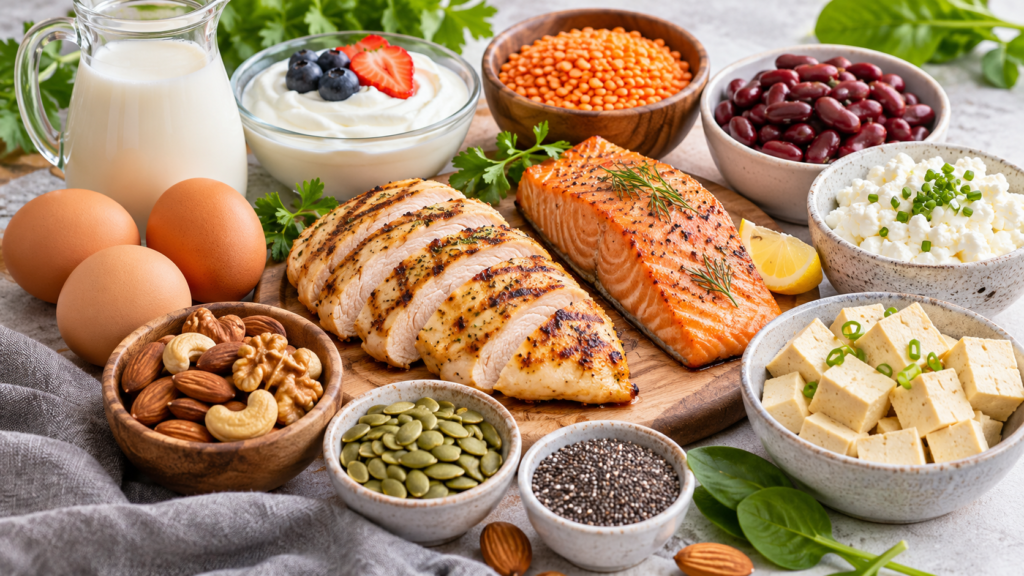
Protein foods such as eggs, fish, lentils, beans, tofu, and yogurt provide amino acids the body needs to build and maintain tissues. The best choices also offer useful nutrients such as fiber, iron, calcium, or unsaturated fats. This guide compares animal and plant protein foods, explains realistic benefits, and shows easy ways to add them to balanced meals.
This guide explains what protein does in your body, why essential amino acids matter, and how animal and plant sources compare. If you are planning a grocery trip, our high-protein grocery shopping guide has a ten-item checklist, portion comparisons, and budget tips.
Planning portions around your usual energy needs? Our free maintenance calorie calculator estimates daily calories (TDEE) and resting energy needs. It helps put meal planning in context, but it does not calculate a personal protein prescription.
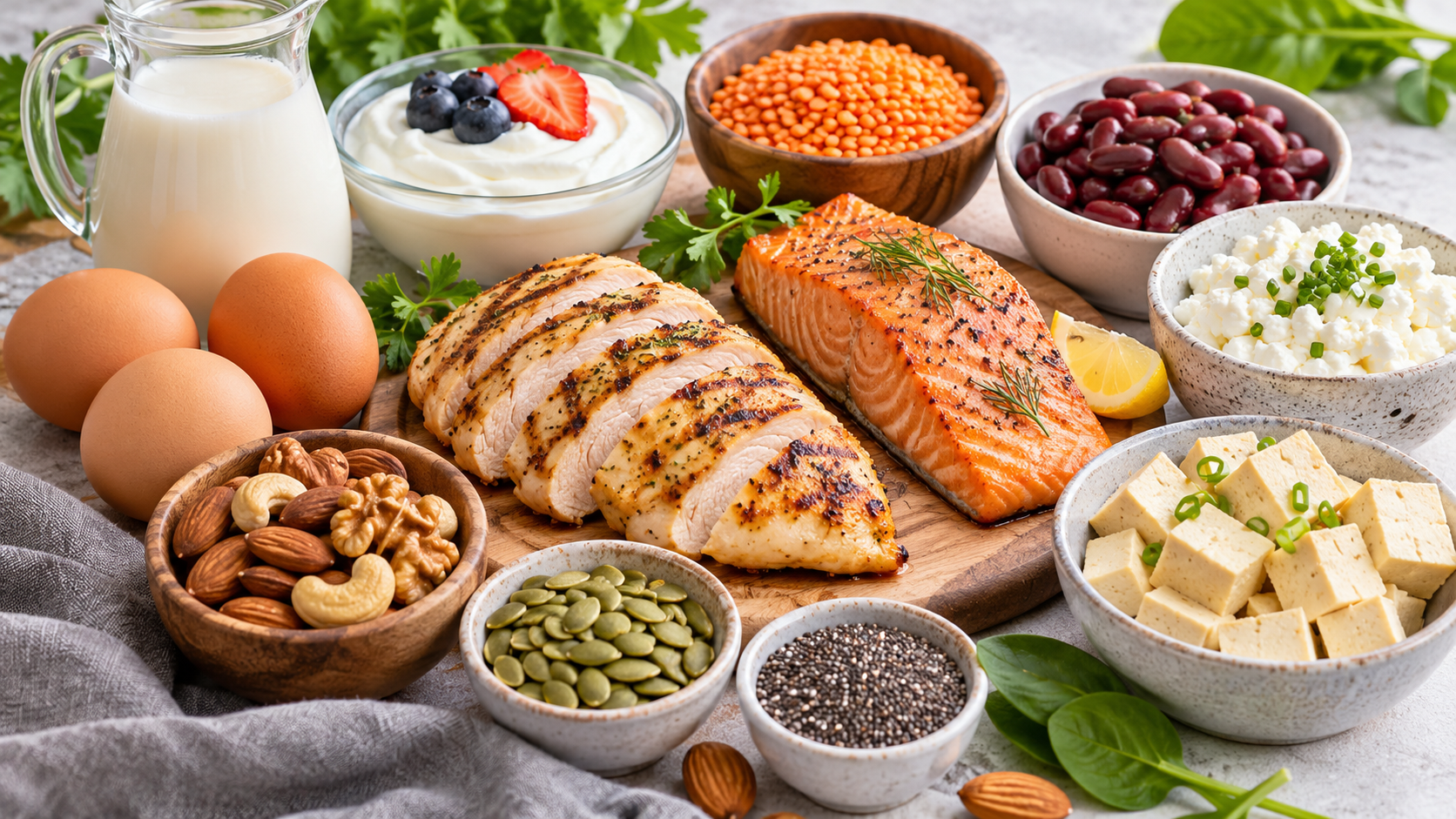
What Is Protein?
Protein is made up of amino acids. Your body uses amino acids to build and repair tissues. As MedlinePlus explains, essential amino acids must come from food, and a variety of protein sources across the day can supply them.
Unlike carbohydrates and fats, protein is primarily used to build and repair cells rather than provide energy. However, when needed, your body can also use protein as an energy source.
Some amino acids are produced naturally by the body, while others—known as essential amino acids—must come from the foods you eat.
Why Is Protein Important?
Protein supports many vital functions, including:
- Building and repairing muscles
- Supporting healthy skin, hair, and nails
- Strengthening bones
- Producing enzymes and hormones
- Supporting immune function
- Helping wounds heal
- Keeping you feeling full for longer
- Supporting healthy growth in children and teenagers
Getting enough protein each day helps your body function properly at every stage of life.
Protein Foods: Nutritional Differences Between Sources
Animal and plant protein foods can both help meet protein needs, but their nutritional profiles differ. Animal foods often provide vitamin B12 and highly digestible protein, while legumes and other plant foods may provide fiber. Soy foods supply all essential amino acids. Evaluate the whole diet rather than treating one food as a cure or a requirement.
Animal-Based Protein Foods
These foods provide complete proteins, meaning they contain all nine essential amino acids.
Chicken Breast
Skinless chicken breast is a lean source of protein that’s low in saturated fat. It’s popular among athletes and people following healthy eating plans.
Eggs
Eggs are packed with high-quality protein, vitamins, minerals, and healthy fats. They’re versatile, affordable, and easy to prepare.
Fish
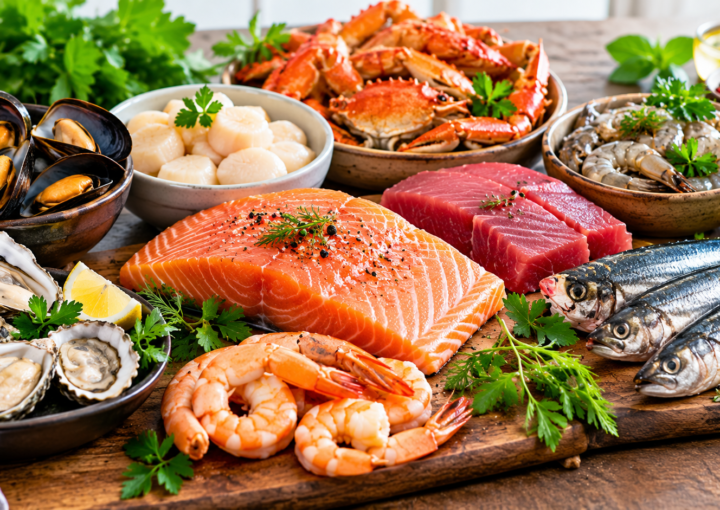
Fish provides protein, while oily varieties such as salmon, sardines and trout can supply meaningful amounts of omega-3 fats; levels differ by species, especially among tuna varieties.
Lean Beef
Lean cuts of beef are rich in protein, iron, zinc, and vitamin B12.
Turkey
Turkey is another lean protein choice that’s lower in fat than many processed meats.
Greek Yogurt
Greek yogurt often contains more protein than standard yogurt, although the amount varies by brand. Compare labels for protein, calcium and added sugar. Not every yogurt has the same live cultures, and a probiotic benefit cannot be assumed.
Cottage Cheese
Cottage cheese is high in protein and makes an excellent breakfast, snack, or post-workout meal.
Plant-Based Protein Foods
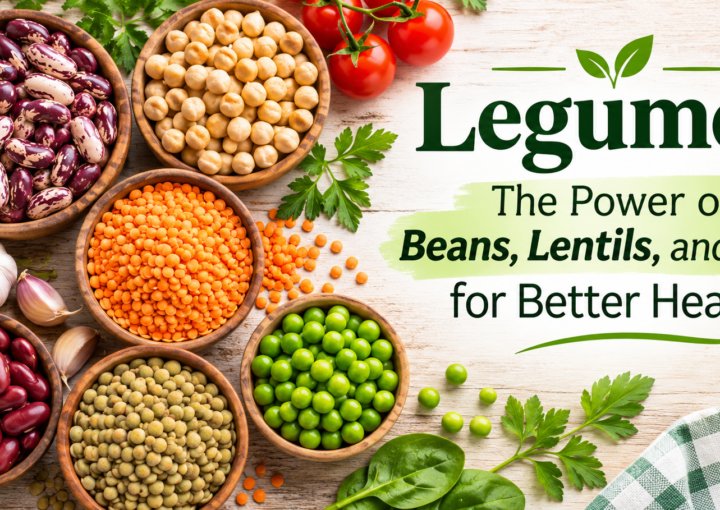
Plant-based protein foods vary in their nutrients. Beans, lentils, nuts and seeds can provide fiber alongside protein, while tofu and some refined soy products may contain little fiber. Compare the whole food, serving size and preparation rather than assuming every plant protein has the same benefits.
Lentils
Lentils are rich in protein, fiber, and iron, making them an excellent choice for vegetarian and vegan diets.
Chickpeas
Chickpeas are nutritious and can be used in salads, soups, curries, or blended into hummus.
Black Beans
Black beans supply plant protein, fiber and minerals. They can fit into an overall heart-healthy eating pattern, but no individual bean treats or prevents disease.
Kidney Beans
Kidney beans are filling, affordable, and work well in stews, chili, and rice dishes.
Tofu
Made from soybeans, tofu is a complete plant protein that absorbs flavors well and can be cooked in many different ways.
Tempeh
Tempeh is a fermented soy product that’s high in protein and has a firm texture, making it a popular meat alternative.
Quinoa
Unlike many grains, quinoa contains all essential amino acids, making it a complete plant protein.
Nuts and Seeds
Almonds, walnuts, peanuts, chia seeds, flaxseeds, pumpkin seeds, and sunflower seeds all contribute protein along with healthy fats and fiber.
Protein Content by Serving: Nutrition Reference
| Food | Approximate Protein (per serving) |
|---|---|
| Chicken breast (100 g) | 31 g |
| Salmon (100 g) | 22 g |
| Eggs (2 large) | 12 g |
| Greek yogurt (170 g) | 17–20 g |
| Cottage cheese (½ cup) | 14 g |
| Lentils (1 cup cooked) | 18 g |
| Chickpeas (1 cup cooked) | 15 g |
| Black beans (1 cup cooked) | 15 g |
| Tofu (100 g) | 8–15 g |
| Quinoa (1 cup cooked) | 8 g |
Values are approximate and may vary by brand and preparation method.
How protein supports body functions
Helps Build and Maintain Muscle
Protein supplies the amino acids needed for muscle growth and repair, making it especially important for active individuals and older adults.
Keeps You Feeling Full
Protein-rich meals can help increase satiety, making it easier to manage hunger and maintain healthy eating habits.
Supports Weight Management
Because protein helps you stay satisfied longer, it may reduce unnecessary snacking and support healthy weight goals when combined with a balanced diet.
Strengthens Bones
Protein works alongside nutrients such as calcium and vitamin D to support healthy bones throughout life.
Supports Immune Health
Many antibodies and immune cells rely on protein to function effectively.
Helps the Body Recover
Protein supports tissue repair after exercise, illness, or injury.
Whole Food Protein vs Processed Protein
Whole food protein sources often provide additional nutrients such as fiber, vitamins, minerals, and healthy fats.
Examples include:
- Eggs
- Fish
- Beans
- Lentils
- Greek yogurt
- Tofu
- Nuts
- Seeds
Protein powders, bars, and shakes can be convenient, but many people can meet their needs with everyday foods. Compare serving size, added sugar, sodium, and ingredients. For grocery planning, compare serving costs, storage needs and practical food choices.
How Much Protein Do You Need?
Daily protein needs depend on body weight, age, activity, pregnancy, and health conditions. For many generally healthy adults, the standard Recommended Dietary Allowance is 0.8 grams per kilogram of body weight per day (about 58 grams for a 72 kg / 159 lb adult). This is a baseline reference, not a personalized target; some people, including athletes and older adults, may need more. Choose varied protein foods across meals rather than assuming more is always better.
In general:
- Children need protein to support growth and development.
- Adults should consume enough protein to maintain muscle and overall health.
- Older adults may benefit from slightly higher protein intake to help preserve muscle mass.
- Athletes and highly active individuals often require more protein to support training and recovery.
If you have kidney disease or another medical condition, follow the guidance of your healthcare provider or a registered dietitian.
Easy Ways to Eat More Protein
Protein needs vary, but distributing protein foods across meals can be a convenient way to eat a varied diet. Examples include yogurt or eggs at breakfast, lentils at lunch, and fish or tofu with vegetables at dinner. These are illustrative meals, not a prescribed protein target.
Try these ideas:
- Start your day with eggs or Greek yogurt.
- Add beans or lentils to soups and salads.
- Snack on nuts or roasted chickpeas.
- Include grilled chicken or fish with lunch and dinner.
- Blend yogurt, milk, or tofu into smoothies.
- Sprinkle seeds over oatmeal or salads.
- Replace refined grains with quinoa in some meals.
Small, consistent changes can help you meet your daily protein needs.
Can You Eat Too Much Protein?
Most healthy people can safely include protein as part of a balanced diet. However, consuming excessive amounts over long periods may not provide additional benefits and could make it harder to eat enough fruits, vegetables, and whole grains.
Balance is key. Aim for a varied diet that includes lean proteins, healthy fats, whole grains, fruits, and vegetables.
Frequently Asked Questions
What are the healthiest protein foods?
Nutritious protein foods include fish, eggs, skinless poultry, beans, lentils, plain Greek yogurt, tofu, nuts, and seeds. There is no single healthiest choice: compare the overall nutrient profile, preparation method, and how the food fits your eating pattern. For example, beans provide fiber, while oily fish can provide omega-3 fats.
Is plant protein as good as animal protein?
Yes. Eating a variety of plant protein foods can provide all the essential amino acids your body needs. Soy foods and quinoa are complete plant proteins, while combinations such as beans and whole grains also support a balanced diet.
Are eggs a good source of protein?
Yes. Eggs are one of the highest-quality protein foods and also provide vitamins, minerals, and healthy fats.
Which protein foods help with weight loss?
Protein-rich foods such as Greek yogurt, chicken, fish, beans, lentils, tofu, and eggs can help you feel full for longer when included in a balanced eating plan.
Can children eat high-protein foods?
Yes. Children need protein for healthy growth and development. Offer a variety of age-appropriate protein foods as part of a balanced diet.
Key Takeaways
- Protein is essential for muscle growth, tissue repair, immune health, and overall wellness.
- Both animal and plant foods can provide high-quality protein.
- Choose a variety of lean, minimally processed protein sources.
- Include protein in each meal to support energy and satiety.
- Pair protein with fruits, vegetables, and whole grains for a balanced diet.
Sources, References and Editorial Notes
For general guidance on balanced plant-based eating, consult the NHS vegetarian diet guide. For food-specific nutrient values and serving-size comparisons, use USDA FoodData Central. Protein amounts vary by brand, preparation, and serving size; this article gives general educational information rather than an individualized dietary prescription.
This guide explains protein’s role in the body, nutritional differences between sources, and general intake considerations. For grocery choices, consider price, storage life and convenience alongside protein content. Medical disclaimer: Consult a qualified healthcare professional for advice tailored to pregnancy, kidney disease, childhood, or other medical needs.
Protein is one part of a balanced diet. For a general adult energy estimate, you can also try our calorie and TDEE calculator; it does not determine an individual medical protein requirement.
Join the conversation