Health benefits of nuts include unsaturated fats, plant protein, fiber and a range of vitamins and minerals. Walnuts provide plant omega-3 ALA, almonds offer vitamin E, and pistachios contribute protein and fiber. The healthiest nuts to eat depend on your needs. Because nuts are calorie-dense, a modest portion is more useful than assuming that more is always better; nuts do not guarantee weight loss or disease prevention.
In this guide, you’ll learn what nuts are, their nutritional value, their health benefits, the different types of nuts, and practical tips for adding them to your meals.
What Are Nuts?
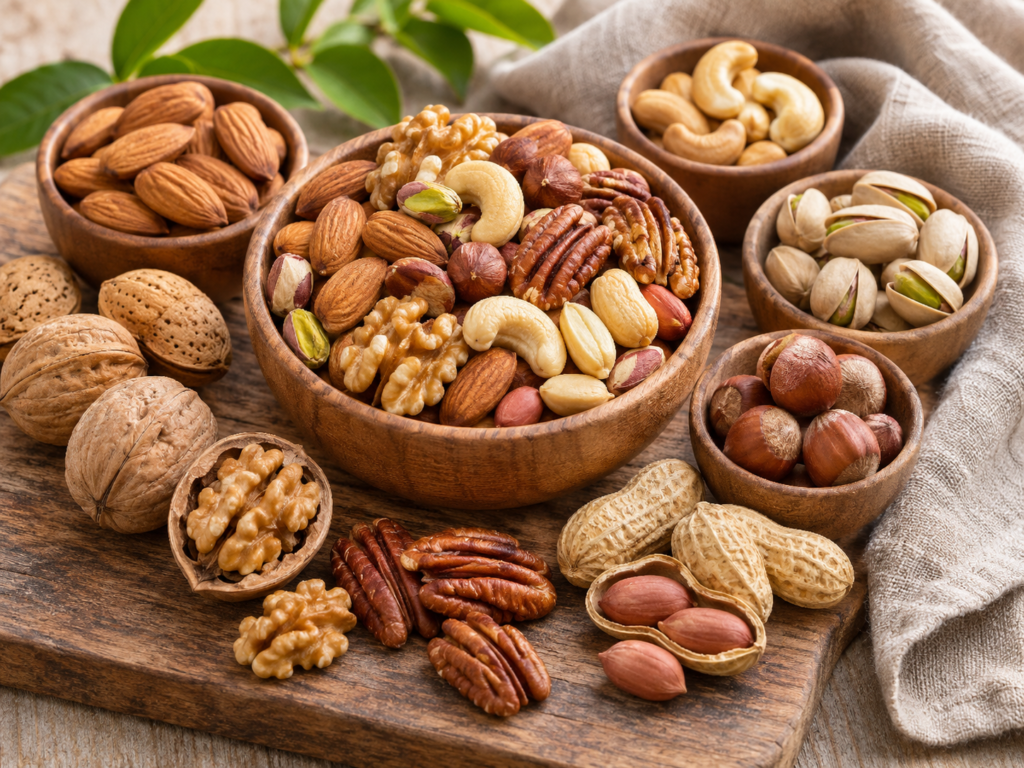
Nuts are edible seeds enclosed in a hard shell. Although some foods commonly called nuts are technically seeds, they offer similar nutritional benefits and are often grouped together.
Popular varieties include:
- Almonds
- Walnuts
- Cashews
- Pistachios
- Pecans
- Hazelnuts
- Brazil nuts
- Macadamia nuts
- Pine nuts
Each type has its own unique flavor and nutrient profile, making it beneficial to enjoy a variety rather than relying on just one.
Nuts Nutrition Facts: Calories, Protein, Fiber and Healthy Fats
While nutrition varies slightly between types, most nuts provide:
- Healthy unsaturated fats
- Plant-based protein
- Dietary fiber
- Vitamin E
- Magnesium
- Potassium
- Zinc
- Calcium
- Iron
- Selenium (especially Brazil nuts)
- Antioxidants
These nutrients play important roles in maintaining healthy muscles, bones, nerves, and the immune system.
7 Health Benefits of Nuts: What the Evidence Says
1. Tree Nuts and LDL Cholesterol
A review of controlled trials found modest average reductions in LDL cholesterol with tree nut intake. Walnuts provide alpha-linolenic acid (ALA), a plant omega-3 fat. Other nuts have different fat profiles.
2. Rich Source of Plant Protein
Nuts provide plant-based protein, making them a valuable option for vegetarians and people looking to reduce meat consumption.
3. Help You Feel Full Longer
The combination of protein, healthy fats, and fiber slows digestion and promotes fullness, which may help reduce unnecessary snacking.
4. Provide Unsaturated Fats
Walnuts contain alpha-linolenic acid (ALA), a plant omega-3 fat, while other nuts supply different combinations of mono- and polyunsaturated fats. Research into brain health does not mean eating walnuts guarantees better memory or prevents cognitive disease.
5. What the Evidence Says About Blood Sugar
Nuts can add protein, fat and fiber to a meal. A review of randomized trials found improvements in some insulin measures, with no clear overall change in fasting glucose or HbA1c. These findings describe group averages. Follow your individual diabetes care plan if you have one.
6. Promote Healthy Digestion
Fiber in nuts supports digestive health by encouraging regular bowel movements and feeding beneficial gut bacteria.
7. Provide Antioxidants
Many nuts contain antioxidants that help protect cells from oxidative stress caused by free radicals.
Healthiest Nuts to Eat: Types of Nuts Compared
Almonds vs Walnuts vs Pistachios: Which Is Better?
These three nuts have different nutritional strengths. Almonds provide vitamin E, walnuts contain alpha-linolenic acid (ALA), and pistachios offer protein and fiber. Compare unsalted versions by the same 1-ounce serving size rather than declaring one the best for everyone. For additional information about nuts nutrition facts, see USDA FoodData Central.
Almonds
Rich in vitamin E, magnesium, and fiber. Almonds are commonly enjoyed as snacks or added to breakfast bowls.
Walnuts
Walnuts contain ALA, a plant omega-3 fat. Their shape is not evidence that they improve brain function.
Cashews
Creamy and slightly sweet, cashews provide copper, magnesium, and healthy fats.
Pistachios
High in protein and fiber, pistachios make a satisfying snack and pair well with salads.
Brazil Nuts
Brazil nuts can contain very high and variable amounts of selenium. Eating several regularly could result in excessive selenium intake, especially alongside supplements. They are not a food to eat in unlimited amounts. See the NIH selenium fact sheet.
Pecans
Pecans contain antioxidants and healthy fats that complement a balanced diet.
Hazelnuts
Hazelnuts provide vitamin E and healthy fats and are commonly used in baking and snacks.
Macadamia Nuts
These nuts are rich in monounsaturated fats and have a buttery texture.
Brazil Nuts and Selenium: Avoid Treating Them Like an Unlimited Snack
Brazil nuts contain unusually high amounts of selenium, and levels vary by growing conditions. The NIH Office of Dietary Supplements notes that a single Brazil nut may contain roughly 68–91 micrograms of selenium; eating too many regularly can exceed recommended upper limits. Portion advice for a general handful of mixed nuts should not be applied indiscriminately to Brazil nuts. If you use selenium supplements or have dietary restrictions, seek individualized advice.
How Many Nuts Should You Eat a Day?
A common serving size is about one small handful (around 28–30 grams) per day. This amount provides valuable nutrients without adding excessive calories.
Choose unsalted and minimally processed nuts whenever possible.
Nuts for Weight Loss: Portion Size Matters
Nuts may support fullness when eaten in moderate amounts, but they are energy-dense. If you are comparing nuts for weight loss, consider replacing another snack rather than adding unlimited nuts. A typical serving is approximately 1 ounce (28 grams); your dietary needs may differ.
Quick Answer: How Many Nuts Should You Eat a Day?
A small handful, about one ounce, is a common adult serving; it is not a requirement to eat nuts daily. Brazil nuts are an exception to the idea of a general handful because selenium levels can be unusually high and variable. NIH selenium guidance explains excessive-intake risks.
Easy Ways to Add Nuts to Your Diet
Adding nuts to meals is simple:
- Sprinkle chopped nuts over oatmeal.
- Mix them into yogurt.
- Add them to salads.
- Blend them into smoothies.
- Use nut butter on whole-grain toast.
- Include them in homemade trail mix.
- Add crushed nuts to stir-fries or vegetable dishes.
- Bake them into healthy muffins or granola.
Are There Any Risks?
Although nuts are highly nutritious, there are a few things to consider:
- Nut allergies can be serious and require medical attention.
- Nuts are calorie-dense, so portion control is important.
- Salted or sugar-coated nuts may contain excess sodium or added sugars.
- Flavored varieties may include unhealthy additives.
Choosing raw or dry-roasted unsalted nuts is generally a healthier option.
Tips for Buying and Storing Nuts
To keep nuts fresh:
- Buy from trusted brands or stores.
- Check the expiration date.
- Store in an airtight container.
- Keep them in a cool, dry place.
- Refrigerate or freeze nuts if storing them for several months.
Proper storage helps prevent the healthy oils in nuts from becoming rancid.
Frequently Asked Questions
Are Nuts Good for Weight Loss?
Nuts may be satisfying in moderate portions, but weight outcomes depend on the whole eating pattern and activity. They are calorie-dense and do not cause weight loss on their own.
Which nuts are the healthiest?
Different nuts offer different nutrients. Eating a variety of almonds, walnuts, pistachios, cashews, pecans, and hazelnuts provides a broad range of nutritional benefits.
Can people with diabetes eat nuts?
Many nuts are naturally low in carbohydrates and can be included in balanced meal plans. People with diabetes should follow advice from their healthcare provider or registered dietitian.
Are roasted nuts healthy?
Dry-roasted nuts without added salt or sugar can be a nutritious choice. Avoid varieties with excessive sodium, sugar, or unhealthy oils.
Can children eat nuts?
Yes, if they do not have a nut allergy and the nuts are served in an age-appropriate form to reduce choking risk.
Key Takeaways
- Nuts are rich in healthy fats, protein, fiber, vitamins, and minerals.
- Eating a small handful daily can support overall health.
- Different types of nuts provide different nutritional benefits.
- Choose unsalted and minimally processed varieties whenever possible.
- Store nuts properly to maintain freshness and quality.
Evidence and Food-Safety References
- NIH Office of Dietary Supplements: Selenium — explains daily requirements, upper limits and excess-intake concerns.
- NIH Office of Dietary Supplements: Omega-3 Fatty Acids — explains plant ALA and marine EPA/DHA.
- USDA FoodData Central — food composition reference; values depend on specific nut and portion.
Choosing nuts and checking the evidence
Try unsalted chopped nuts over porridge or yoghurt, or stir them into a salad. Check ingredients for nut allergens. Whole nuts are unsuitable for young children because they can be a choking hazard; use an age-appropriate form.
For the distinction between plant ALA and the EPA/DHA found in seafood, see the NIH omega-3 fact sheet. This guide describes foods, not a treatment or supplement prescription. Source checked 2 November 2026.
For more options beyond nuts, read our guide to protein foods and whole grains guide. Choose portions and combinations that suit your own dietary needs and any allergies.
Whole nuts can be energy-dense, so portion size matters alongside food quality. For a separate estimate of daily adult energy needs, use our free maintenance calorie and TDEE calculator; it does not prescribe portions or replace individual nutrition advice.
Join the conversation