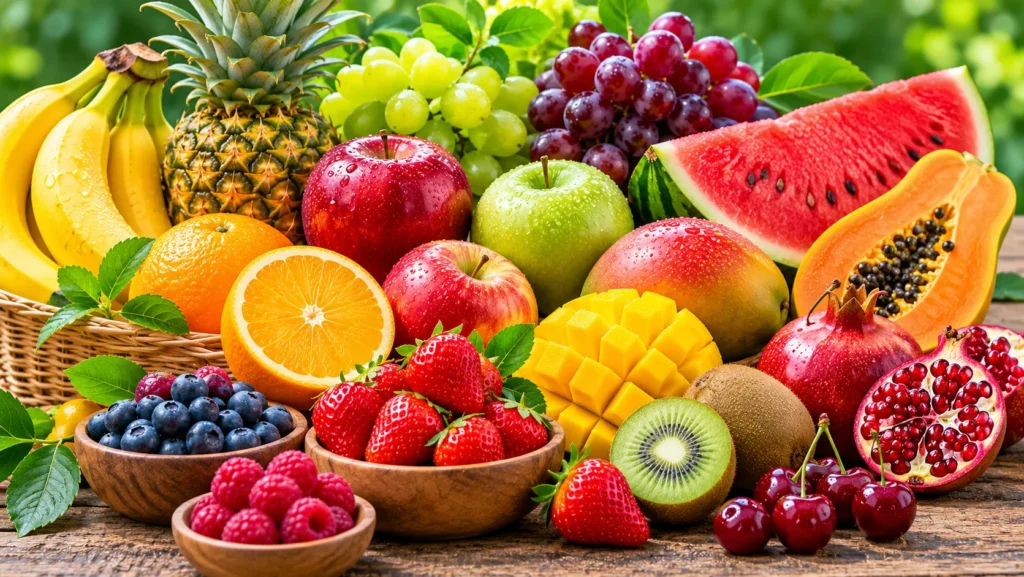
Healthy fruits provide fiber, water, natural carbohydrates, vitamins and minerals as part of a balanced diet. The benefits of fruits depend on variety, serving size and how you eat them. Apples, berries, oranges, bananas and many other affordable options can be nutritious; no single fruit prevents disease or guarantees weight loss.
Quick answer: The healthiest fruits to eat are the ones you enjoy regularly in a varied diet. Choose whole fruit more often than juice, mix fruit colors throughout the week, and use unsweetened frozen fruit when fresh produce is expensive. For a simple snack, combine an apple or berries with plain yogurt or a small amount of nuts.
A colorful mix of healthy fruits gives you different nutrients, flavors and convenient meal options.
What are healthy fruits and why do they matter?
Fruit is the seed-bearing part of a plant in botanical terms, but everyday food guidance usually groups sweet fruits such as apples, berries and citrus together. Many fruits contain fiber and water as well as nutrients such as vitamin C or potassium. Nutrient profiles vary substantially: an orange and a banana are not interchangeable sources of every vitamin or mineral.
Most plain whole fruit does not contain added sugar. Canned, sweetened dried and processed fruit products may contain syrup or added sugars; check the ingredient list and Nutrition Facts label.
Fruit nutrition facts: key nutrients and examples
| Component | Why it matters | Examples |
|---|---|---|
| Dietary fiber | Supports digestion and may contribute to fullness | Raspberries, pears, apples with skin |
| Vitamin C | Supports collagen formation and normal immune function | Oranges, kiwi, strawberries |
| Potassium | Supports normal muscles, nerves and blood-pressure regulation | Bananas, cantaloupe, apricots |
| Folate | Supports normal cell formation | Oranges, avocados |
| Water | Contributes to daily fluid intake | Watermelon, strawberries, melon |
| Plant compounds | Help provide dietary variety; research examines many of their effects | Berries, cherries, grapes |
Amounts vary by fruit size, variety and preparation. Use USDA FoodData Central for nutrients in a specific fruit and serving.
7 Health Benefits of Eating Fruit
1. Fruits supply important vitamins and minerals
Fruit provides a convenient way to obtain several essential nutrients. Citrus and kiwi can supply vitamin C; bananas and melons provide potassium. Eating several types is more useful than relying on one fruit for every nutrient.
2. Whole fruit adds fiber for digestive health
Fiber supports bowel regularity and is part of a healthy digestive pattern. Juicing often removes much of the fiber, which is one reason whole fruit is often a more satisfying choice than strained juice.
3. A fruit-rich diet may support heart health
Higher intake of fruit and vegetables is associated with cardiovascular benefits in research. Whole fruit can be part of a heart-healthy eating pattern, but it cannot independently treat hypertension or prevent heart disease.
4. Water-rich fruits can support hydration
Watermelon, strawberries and oranges contribute fluid alongside other drinks and foods. They do not replace appropriate hydration practices during intense activity or illness.
5. Fruit can make snacks more satisfying
A piece of whole fruit has water and often fiber, making it a practical swap for some highly processed snacks. Body-weight outcomes depend on your overall eating pattern; fruit is not a weight-loss treatment.
6. Fruits add color and diverse plant compounds
Berries, cherries, citrus and grapes contain different plant compounds. Color is a useful reminder to vary your food choices, not evidence that a particular fruit will “detox” your body.
7. Fruit offers convenient options at different budgets
Bananas, seasonal apples and frozen berries can be easier to fit into a routine than expensive specialty products. Accessibility and repeatable habits matter for dietary quality.
10 healthiest fruits to eat: a practical comparison
There is no scientifically universal ranking of the single healthiest fruit. The following options are useful because of their nutrient differences, availability and versatility.
| Fruit | Notable feature | Easy use |
|---|---|---|
| Apples | Fiber, particularly when eaten with the skin | Whole snack or sliced with yogurt |
| Bananas | Potassium and convenient carbohydrates | Oatmeal or portable snack |
| Oranges | Vitamin C and water | Whole segments with breakfast |
| Strawberries | Vitamin C, water and fiber | Plain yogurt or overnight oats |
| Blueberries | Fiber and plant pigments | Fresh or frozen breakfast topping |
| Raspberries | Relatively fiber-rich berries | Oatmeal and fruit bowls |
| Kiwi | Vitamin C and fiber | Sliced fruit salad |
| Mango | Carotenoids and vitamin C | Fresh slices or unsweetened frozen pieces |
| Pears | Fiber, especially with edible skin | Snack or baked with cinnamon |
| Watermelon | High water content | Chilled summer snack |
Types of healthy fruits and how to choose them
Citrus fruits: oranges, grapefruit, lemons and mandarins. Berries: strawberries, blueberries, raspberries and blackberries. Tropical fruits: mango, pineapple, papaya and kiwi. Stone fruits: peaches, plums, cherries and apricots. Pome fruits: apples and pears. Pick several types you enjoy rather than choosing based only on a “superfruit” label.
Grapefruit can interact with certain medicines, so check your medication guidance or ask your pharmacist before eating it regularly if you take prescription drugs.
How much fruit should you eat each day?
United States: The Dietary Guidelines for Americans, 2025–2030 recommend two servings of fruit a day for a 2,000-calorie eating pattern, with adjustments based on individual calorie needs. The guidelines favor whole fruit and recommend limiting 100% fruit juice portions or diluting them with water.
What does one cup of fruit look like? For US-style meal planning, a small apple, a large banana or a measured cup of chopped fruit are examples of one fruit cup-equivalent. Half a cup of dried fruit also counts as one cup-equivalent. For example, a small apple at lunch and half a cup of chopped fruit with breakfast add up to about 1.5 cup-equivalents, not a universal daily target. See Rutgers Cooperative Extension portion examples.
United Kingdom: The NHS 5 A Day target is at least five portions of fruit and vegetables combined per day. One adult portion of most fresh, frozen or canned fruit is around 80 g; dried fruit is about 30 g, best eaten with meals. Fruit juice and smoothies combined should be limited to 150 mL per day and count as no more than one portion. See NHS portion examples.
For a separate general estimate of daily adult energy needs, use our free calorie calculator. It does not prescribe fruit portions or a medical eating plan.
Whole fruit vs fruit juice: what is better?
| Option | Potential advantage | What to consider |
|---|---|---|
| Whole fruit | Typically retains the fruit’s fiber and structure | Usually a more filling everyday choice |
| 100% fruit juice | Can provide some vitamins | Often less fiber; easy to drink a large amount quickly |
| Smoothies | Can include whole blended fruit | Portions and additions vary; UK 5 A Day treats juices and smoothies together |
| Fruit drinks | Convenient | May have added sugar and little actual fruit |
Whole fruit is generally the most practical default; juice is not inherently poisonous, but it does not offer an identical eating experience or fiber content.
Fresh vs frozen vs canned vs dried fruits
| Type | What works well | Label and portion tips |
|---|---|---|
| Fresh | Great texture and seasonal choices | Buy what you can use before it spoils |
| Frozen | Convenient and useful for breakfast bowls | Choose plain unsweetened fruit |
| Canned | Long shelf life | Choose fruit packed in water or natural juice rather than syrup |
| Dried | Portable, concentrated flavor | Smaller portion; check for added sugar and remember dental health |
Frozen fruit is not automatically less nutritious than fresh fruit. Food choice should consider affordability, storage and whether you actually enjoy eating it.
7 simple ways to eat healthy fruits every day
- Add berries or banana to unsweetened oatmeal.
- Pack an apple, pear or mandarin with lunch.
- Top plain yogurt with sliced fruit.
- Use unsweetened frozen fruit in a breakfast bowl.
- Pair fruit with nuts, if you do not have a nut allergy, for a satisfying snack.
- Make a fruit-and-vegetable salad with a simple dressing.
- Choose fresh fruit more often as a dessert instead of relying on highly sweetened packaged treats.
For more meal planning ideas, explore our whole grains guide, nuts nutrition guide and vegetable benefits guide.
Fruit safety, allergies and medication considerations
Wash fruit under running water before cutting or eating, including produce you plan to peel. Do not wash with soap or detergent. Keep fresh produce away from raw meat, poultry and seafood; refrigerate cut or perishable fruit appropriately. Follow the FDA produce safety guide.
Food allergies and medical conditions may require personalized guidance. Fruit still contains carbohydrate, so people managing diabetes may need to account for portions as part of their meal plan. Ask a pharmacist about grapefruit interactions with prescription drugs, and seek professional advice for medically restricted diets.
Frequently asked questions about healthy fruits
What are the main benefits of fruits?
Fruit contributes fiber, water and nutrients such as vitamin C and potassium. Eating a variety can support an overall nutrient-rich dietary pattern.
Which fruit is the healthiest?
No single fruit meets every nutritional need. Apples, berries, bananas, oranges, kiwi and other fruits have different strengths. Choose several types across the week.
Is it healthy to eat fruit every day?
For most people, yes. Daily fruit can fit into a balanced diet, though appropriate portions vary with personal needs.
Are frozen fruits healthy?
Yes. Unsweetened frozen fruit can supply useful nutrients and often reduces waste.
Are fruits good for weight loss?
Whole fruit may be a satisfying food, but no fruit causes weight loss by itself. Overall food choices and energy intake matter.
Do fruits have too much sugar?
Whole fruit contains naturally occurring sugar along with water and often fiber. It is different from foods with added sugar; individuals who monitor carbohydrates may need to consider portion size.
Is whole fruit healthier than fruit juice?
Whole fruit generally provides more fiber and can be more filling than juice. Juice portions are easier to overconsume.
Can fruit be eaten at night?
There is no general rule that healthy adults must avoid fruit after a particular hour. Overall eating patterns and individual circumstances matter more.
Key takeaways
- Healthy fruits provide different combinations of fiber, water, vitamins and minerals.
- Variety is more useful than trying to find one “best” fruit.
- Choose whole fruit more often than juice, and compare added sugars in packaged products.
- Plain frozen and suitable canned fruit can be affordable alternatives to fresh.
- Use food-safety practices and seek individualized advice when medicines or health conditions affect fruit choices.
Sources and editorial note
- USDA and HHS — Dietary Guidelines for Americans, 2025–2030.
- USDA FoodData Central.
- NHS — 5 A Day: What Counts.
- NHS — 5 A Day Portion Sizes.
- FDA — Selecting and Serving Produce Safely.
Editorial and medical note: This guide is general nutrition education, not individualized medical advice. Nutrition values and product ingredients vary; check the packaging and consult qualified professionals for health-related restrictions.


Join the conversation