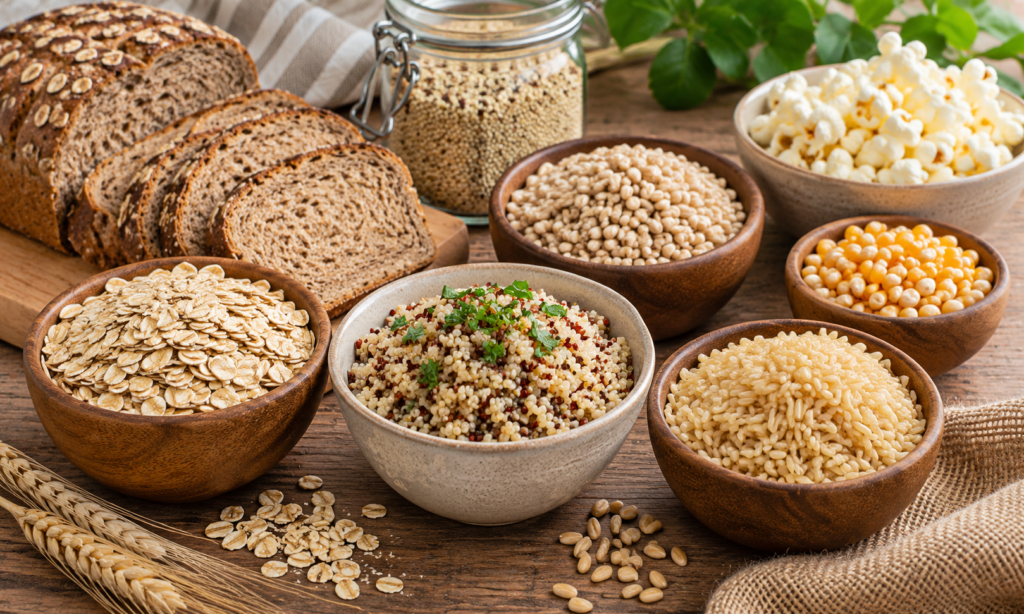
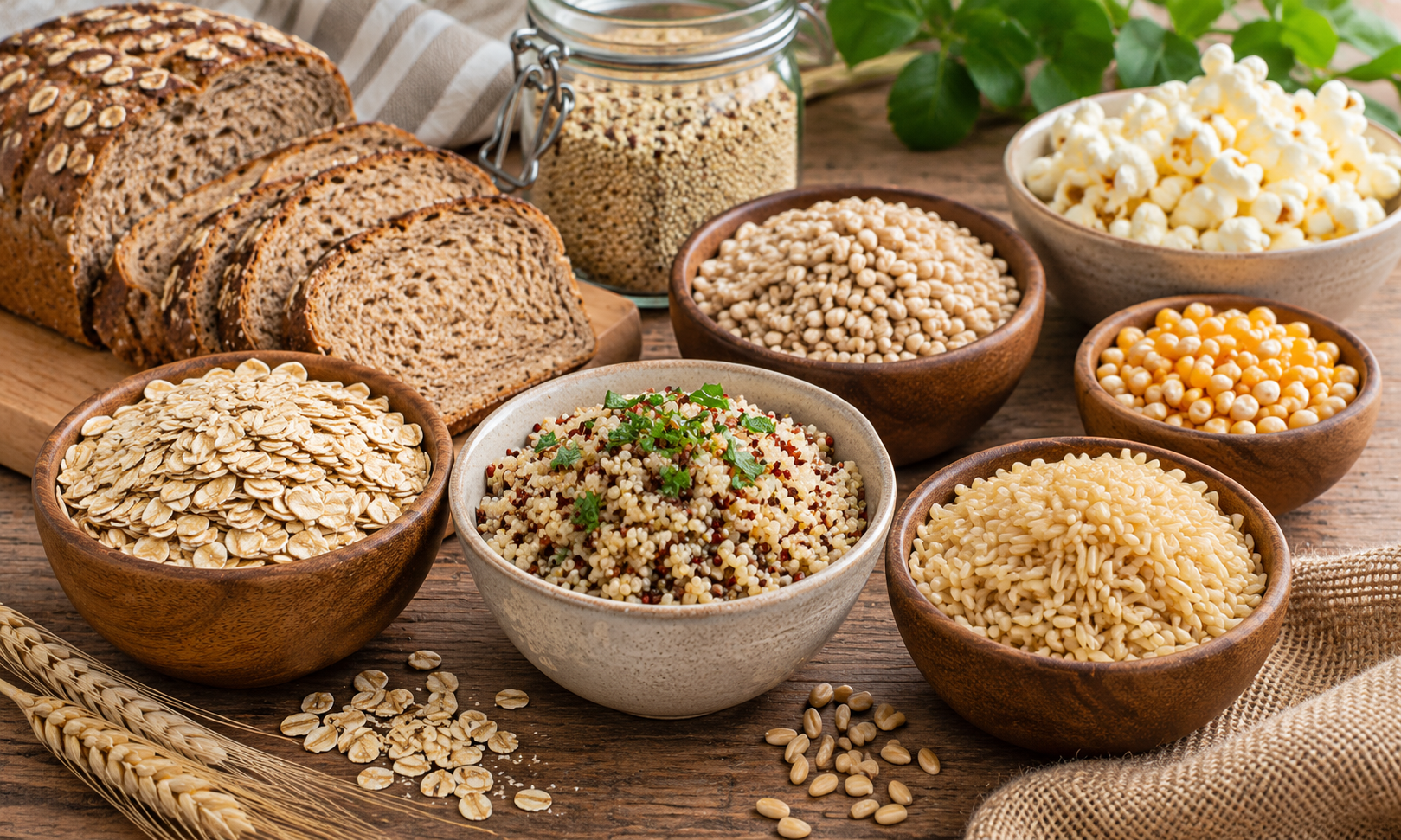
Whole grains are foods made with the bran, germ and endosperm of the grain kernel still present. Oats, brown rice, whole wheat, quinoa and popcorn are familiar examples. Compared with many refined grains, they generally offer more fiber and a different mix of vitamins, minerals and plant compounds. A practical starting point is to make at least half of your grain choices whole grains, while considering your overall diet and individual needs.
Quick answer: Choose oats at breakfast, swap white bread for 100% whole-wheat bread, use brown rice or quinoa in a grain bowl, and read the ingredient list rather than trusting the color of a package. Whole grains are nutritious, but no single grain guarantees weight loss, stable blood sugar or disease prevention.
What are whole grains?
A whole grain retains the three main parts of its original kernel, whether the grain is intact, cracked, rolled or milled into flour. Bran is the outer layer with much of the fiber; germ contains oils and nutrients; and endosperm supplies most of the starch and some protein. Refining typically removes the bran and germ. Some refined grains are enriched with B vitamins and iron, but enrichment generally does not restore their original fiber.
Quinoa and buckwheat are technically seeds (often called pseudocereals) but are commonly used as whole-grain alternatives in cooking.
Whole grain nutrition: what do you actually get?
Nutrition varies significantly by grain, processing method, brand and serving size. Whole grains can contribute carbohydrates for energy, fiber, protein, B vitamins and minerals such as magnesium and iron. Do not assume every product labeled “whole grain” is high in fiber; always compare its Nutrition Facts label.
| Nutrient or component | What it does | Practical note |
|---|---|---|
| Dietary fiber | Supports regular bowel movements; some types help lower LDL cholesterol. | Compare fiber grams per serving on similar products. |
| Carbohydrate | Provides energy. | Whole grains still contain carbohydrate; portion size matters. |
| Protein | Contributes to normal tissue maintenance. | Amounts differ; pair grains with beans, eggs or other protein foods. |
| B vitamins | Help the body use energy from food. | Enriched refined grains may also supply several B vitamins. |
| Magnesium and iron | Support normal muscle, nerve and oxygen-transport functions. | Amounts and absorption vary by food and diet. |
Seven potential benefits of eating whole grains
1. A heart-healthier eating pattern
Higher whole-grain intake is associated with better cardiovascular outcomes in many studies. Replacing some refined grain choices with whole grains can support a heart-healthy dietary pattern; it is not a treatment or guaranteed reduction in risk for any individual.
2. Digestive regularity
Fiber can improve stool regularity. Increase higher-fiber foods gradually and drink enough fluids, especially if your usual diet is low in fiber.
3. Greater satisfaction after meals
Fiber-rich foods can help some people feel satisfied. Fullness depends on the food’s texture, portion, protein, fat and the rest of the meal, not the whole-grain label alone.
4. More nutrient-dense grain choices
Whole grains retain kernel components that refinement often removes. Enriched white bread still provides useful nutrients, so the decision is about overall food quality rather than labeling refined grains as “empty.”
5. Flexible options for everyday meals
Oatmeal, quinoa, brown rice and whole-wheat pasta can be paired with vegetables, legumes and protein foods. This makes balanced meals easier without a highly restrictive eating plan.
6. Blood glucose considerations
Some minimally processed whole-grain foods produce a different glucose response than comparable refined products. However, a finely milled whole-wheat bread can affect blood glucose differently from intact oats or barley. Carbohydrate amount, preparation and other foods in the meal matter, especially for people managing diabetes.
7. Long-term healthy eating habits
Making repeatable swaps may improve dietary quality over time. Whole grains do not independently cause weight loss; energy intake, food preferences and activity still matter.
Whole grains vs. refined grains
| Feature | Whole grains | Refined grains |
|---|---|---|
| Kernel | Bran, germ and endosperm retained in original proportions | Typically bran and germ removed |
| Common examples | Oats, brown rice, 100% whole-wheat flour | White rice, conventional white flour, regular pasta |
| Fiber | Often higher, but varies | Often lower, unless fiber is added |
| Micronutrients | Some naturally retained | Some may be added through enrichment or fortification |
| Best way to choose | Check ingredients and fiber per serving | Consider overall meal and nutrient needs |
Types of whole grains and easy ways to use them
| Grain | How to use it | Important detail |
|---|---|---|
| Oats | Oatmeal, overnight oats, baked oats | Steel-cut and traditional rolled oats are whole grains; watch added sugar in flavored packets. |
| Brown rice | Rice bowls, soups, stir-fries | Contains more fiber than typical white rice, but still contributes carbohydrate. |
| Whole wheat | Bread, pasta, wraps | Look for “whole wheat flour” as an ingredient; “wheat bread” alone is not enough. |
| Quinoa | Salads, warm bowls, pilaf | A naturally gluten-free pseudocereal; prevent cross-contact when needed. |
| Barley | Stews, soups, grain bowls | Choose hulled barley when seeking the least refined form; pearled barley has some outer layers removed and contains gluten. |
| Buckwheat | Groats, porridge, pancakes | Not related to wheat and naturally gluten-free in pure form. |
| Popcorn | Simple snack | A whole grain; large additions of butter, salt or sugar change the nutritional profile. |
| Millet | Porridge, pilaf, side dish | Naturally gluten-free in its pure form. |
How to spot a genuinely whole-grain product
- Read the ingredient list. Look for specific terms such as “whole wheat flour,” “whole grain oats,” or “whole rye.”
- Do not judge by color or marketing. “Multigrain,” “seven-grain,” “wheat bread” and brown coloring do not prove that most grain ingredients are whole.
- Compare similar products. Check fiber per serving as well as added sugar and sodium, especially in breakfast cereals and breads.
- Look at the whole meal. A whole-grain cookie remains a cookie; the label does not cancel added sugar or overall calories.
How much whole grain should you eat?
The Dietary Guidelines for Americans, 2025–2030 prioritize fiber-rich whole grains and give a general goal of 2–4 servings per day, adjusted to individual calorie needs. Oatmeal at breakfast and whole-wheat bread at lunch are two practical ways to include whole grains.
To estimate maintenance energy needs separately, try our free calorie calculator; it does not determine how many grain servings you personally require.
Five practical whole-grain swaps
- Breakfast: Cook plain oatmeal with berries and yogurt instead of choosing a heavily sweetened cereal.
- Lunch: Make a sandwich on 100% whole-wheat bread with a protein filling and vegetables.
- Dinner: Mix brown and white rice first if your household is adjusting to the texture.
- Meal prep: Add cooled, cooked quinoa to a salad with chickpeas, lemon and herbs.
- Snack: Try lightly seasoned popcorn instead of assuming all packaged “multigrain” chips are high-fiber.
For meal inspiration, see our savory oatmeal with egg, apple cinnamon overnight oats and healthy quinoa recipe ideas.
Who needs to be careful with whole grains?
Celiac disease: Wheat, barley and rye contain gluten. Pure quinoa, brown rice, millet and buckwheat are naturally gluten-free, but cross-contact can happen during production. Oats need special attention: choose oats labeled gluten-free and follow medical or dietitian guidance if you have celiac disease.
Wheat allergy: Avoid wheat-containing products according to your clinical care plan; “whole grain” does not mean allergen-free.
Digestive sensitivities: Fiber-rich grains can cause bloating when introduced abruptly. Increase them slowly and seek individual advice for persistent symptoms.
Frequently asked questions
Are whole grains better than white rice or white bread?
Whole-grain versions often contain more fiber and retain more of the original kernel nutrients. Enriched refined grains can still be part of a balanced diet; consider your whole eating pattern.
Is oatmeal a whole grain?
Yes. Steel-cut and plain rolled oats retain the whole-grain components. Flavored instant oats can also contain whole-grain oats, but check added ingredients.
Is quinoa a whole grain?
Botanically, quinoa is a seed. Nutritionally and in cooking it is commonly grouped with whole grains.
Are whole grains gluten-free?
Some are, including rice, quinoa and millet in their pure form. Wheat, barley and rye contain gluten. For celiac disease, read labels and avoid cross-contact.
Will whole grains make me lose weight?
Not automatically. Fiber-rich foods may support satisfaction, but changes in body weight depend on the broader pattern of eating and other factors.
Does “multigrain” mean whole grain?
No. It means more than one grain is present, and those grains may be refined. Read the ingredient list.
Key takeaways
- Whole grains retain the bran, germ and endosperm.
- Choose a variety of minimally processed grains rather than relying on one product.
- Use ingredient lists and Nutrition Facts panels to compare breads and cereals.
- A practical goal is to make at least half your grain choices whole grains.
- Check gluten status and cross-contact if you have celiac disease or another diagnosed restriction.
Sources and editorial note
- USDA and HHS Dietary Guidelines for Americans, 2025–2030.
- American Heart Association — Whole grains, refined grains and dietary fiber.
- NIDDK — Eating, Diet & Nutrition for Celiac Disease.
Editorial note: This article provides general food education, not individualized clinical advice. Health benefits depend on overall diet and circumstances. Ingredient formulations and nutrition labels can change; check product packaging before purchasing.

Join the conversation